Category | Quality Management
Last Updated On 24/07/2026

Disruptions are no longer rare events. Cyberattacks, system failures, supply chain issues, and natural disasters can stop operations without warning. Many organizations do have recovery documents, but they often fail during real incidents because they are generic or outdated.
In ISO 22301 training and audit preparation sessions, we often see organizations with recovery documents that look complete but fail during simulations because priorities were never clearly tested.
An ISO 22301 disaster recovery plan brings structure to chaos. Instead of reacting emotionally or randomly, teams follow a clear recovery logic based on business priorities. The outcome is not just faster recovery, but calmer decision-making and stronger confidence from customers, regulators, and leadership.
This article focuses on how to create a disaster recovery plan that works under pressure, not just on paper.
ISO 22301 is the international standard for Business Continuity Management Systems (BCMS). Disaster recovery is not treated as a standalone IT task—it is part of an integrated management system.
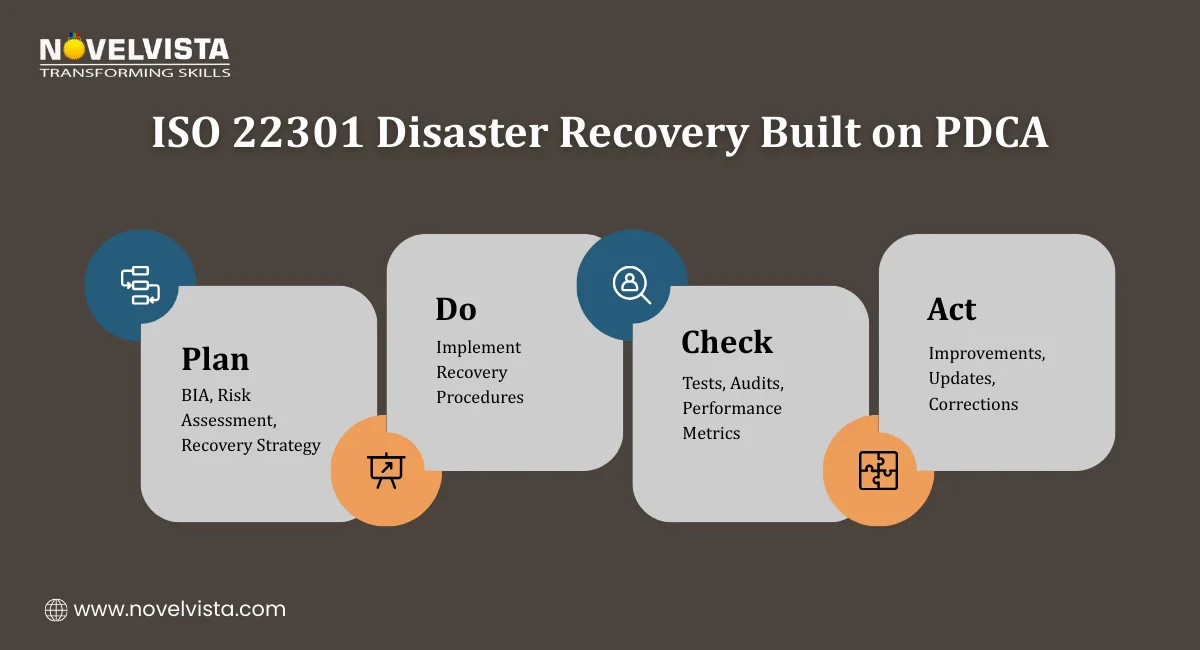
The ISO 22301 disaster recovery plan is built using the Plan–Do–Check–Act (PDCA) cycle:
Two foundations drive this approach:
BIA identifies which activities must be restored first and why. It avoids blanket recovery and focuses effort where it truly matters.
Risk assessment looks at threats, vulnerabilities, and dependencies. It helps teams decide what level of recovery capability is needed.This approach ensures the disaster recovery planning process is practical, prioritized, and aligned with business objectives—not just technical capability.
Every effective recovery plan starts with clarity. Before designing procedures, organizations must understand their environment.
Key actions include:
Leadership commitment is critical. ISO 22301 requires top management to:
ISO 22301 places accountability with top management, which is why auditors consistently look for leadership decisions and approvals tied to recovery planning. Without leadership backing, even the best-designed ISO 22301 disaster recovery plan struggles during real incidents.
Learn how to create a disaster recovery plan that teams can execute, and auditors can verify, without paper-only compliance.
This step determines whether recovery will be successful or chaotic.
BIA identifies critical activities and the resources that support them. It defines:
BIA also measures impact over time—financial, operational, legal, and reputational. This ensures recovery priorities are based on real business consequences.
Risk assessment evaluates:
Together, BIA and risk assessment form the backbone of the disaster recovery planning process, ensuring recovery sequencing is logical and defensible.
To understand how organizations identify, analyze, and manage disruption risks in practice, explore our detailed guide on ISO 22301 Risk Assessment.
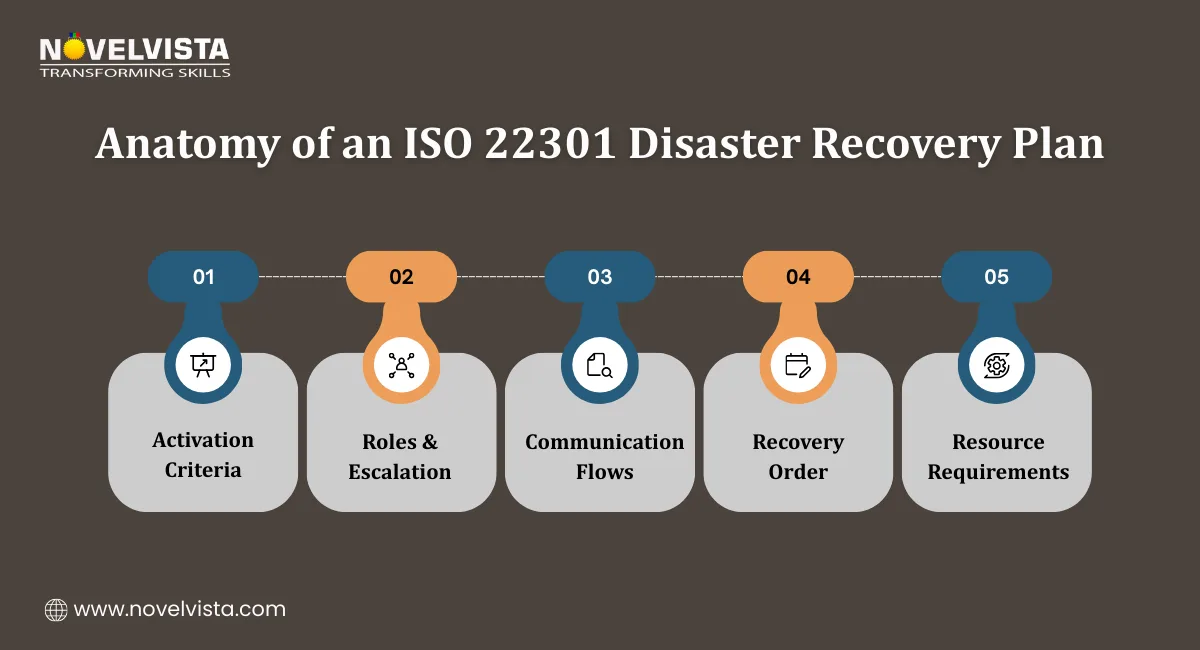
Once priorities are clear, the actual plan takes shape. A strong ISO 22301 disaster recovery plan is detailed, practical, and usable during stress.
The plan should clearly define:
Procedures should cover:
For ICT recovery, ISO 22301 aligns with ISO 27031. This helps define recovery tiers, data protection strategies, and system restoration priorities in a structured way.
Effective recovery plans translate analysis into step-by-step actions that teams can follow under stress, not just during documentation reviews.
A plan only becomes valuable when people can actually use it. In the Do phase, the ISO 22301 disaster recovery plan is put into action across the organization.
Key implementation activities include:
Documentation matters here, but usability matters more. Teams should document:
A good ISO 22301 disaster recovery plan is written so it can be followed under pressure, not just reviewed during audits.
Testing is where most recovery plans either prove their value or expose weaknesses. ISO 22301 expects plans to be tested regularly, not assumed to work.
Common testing methods include:
Performance should be measured against:
In audit simulations, tabletop exercises often reveal decision-making gaps that technical tests alone fail to expose. Findings, gaps, and observations must be recorded. This keeps the disaster recovery planning process measurable and audit-ready.
Recovery planning is never “done.” Changes in technology, suppliers, people, and risks mean the plan must evolve.
In this phase, organizations should:
Plans should be revised when there are:
Setting improvement objectives for the next cycle ensures the ISO 22301 disaster recovery plan stays relevant and reliable over time.
Auditors do not just check whether a plan exists. They check whether it makes sense and whether it works.
Lead auditors typically look for:
A strong ISO 22301 disaster recovery plan tells a consistent story across policy, analysis, testing, and improvement.
Even mature organizations often repeat the same mistakes. Common gaps include:
Most disaster recovery findings arise not from missing plans, but from plans that no longer reflect how the organization actually operates.
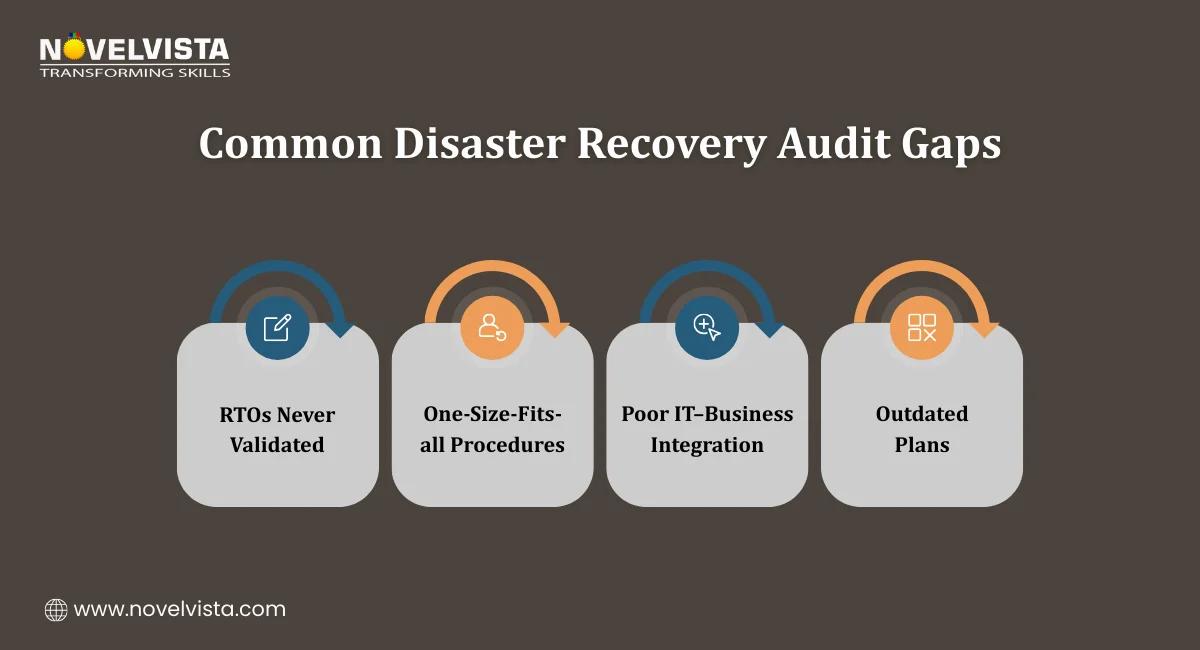
ISO 22301 offers a clear, structured way to build disaster recovery capability that is practical, measurable, and auditable. When organizations follow the standard properly, recovery becomes predictable instead of reactive.
Organizations that test, review, and update recovery plans regularly tend to face fewer audit findings and recover faster during real disruptions.
Embedding the ISO 22301 disaster recovery plan into management systems turns resilience into a living process, not a static document. This approach builds confidence with customers, regulators, and auditors alike.

If you want to go beyond planning and confidently assess recovery capability, NovelVista’s ISO 22301 Lead Auditor Certification Training is a strong next step. The program helps professionals understand audit expectations, evidence evaluation, testing effectiveness, and continual improvement requirements. It’s ideal for those involved in governance, internal audits, supplier assessments, or certification readiness who want practical, real-world auditor skills.
ISO 22301 provides a comprehensive framework for ensuring business continuity across the entire organization, while a disaster recovery plan focuses specifically on restoring IT systems, applications, and data after a disruption.
Author Details

Course Related To This blog
ISO 22301:2019 Lead Auditor
Confused About Certification?
Get Free Consultation Call
Stay ahead of the curve by tapping into the latest emerging trends and transforming your subscription into a powerful resource. Maximize every feature, unlock exclusive benefits, and ensure you're always one step ahead in your journey to success.